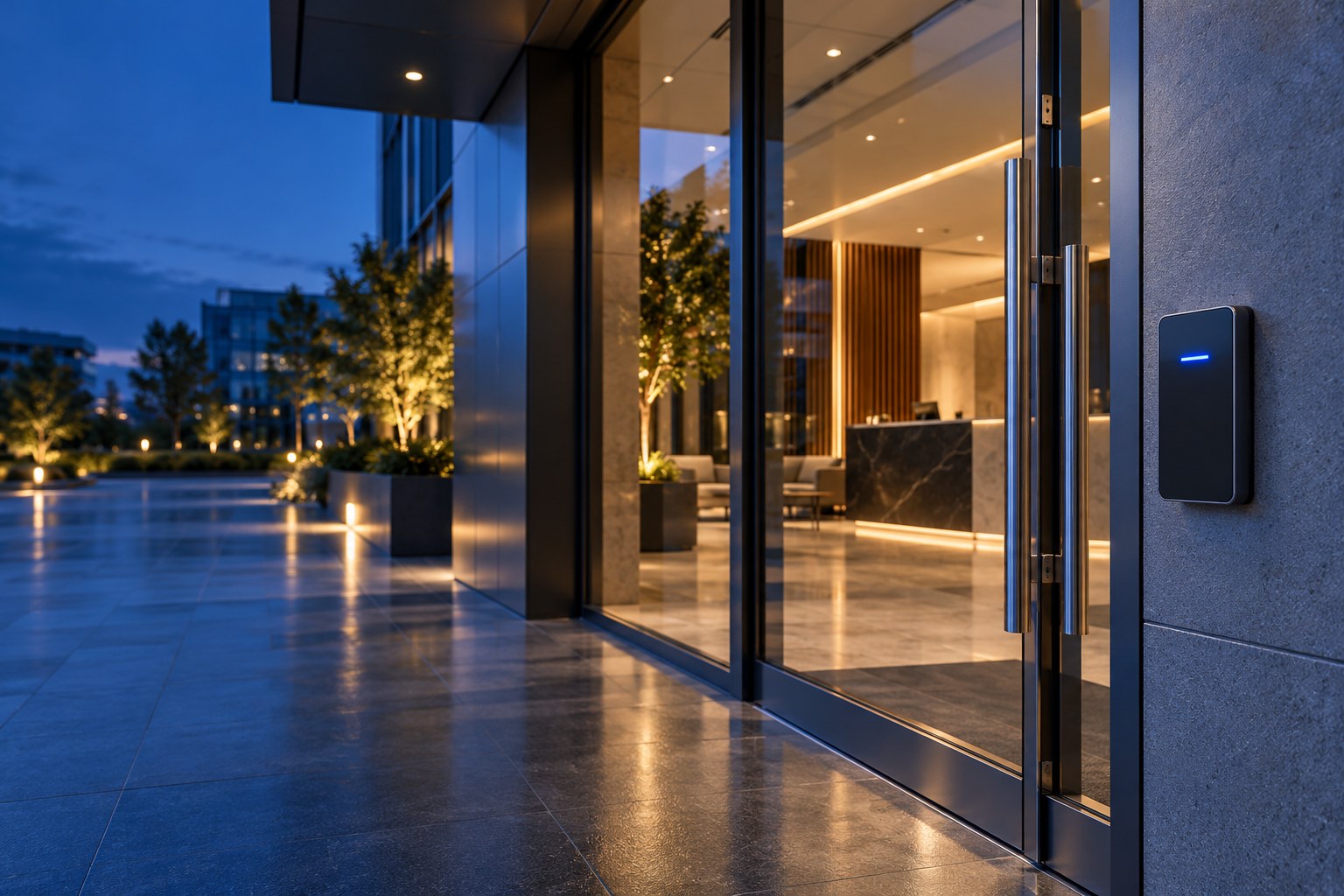
Every building has its own pattern of movement. Staff arrive, visitors check in, suppliers make deliveries and some rooms need more restricted entry than others. Access control starts with deciding who should enter each space, at what time and through which entrance.
Map the way people use the building
List the entrances and internal areas that need controlled access. Discuss staff access separately from visitor and delivery arrangements. Consider whether everyone needs the same permissions or whether specific rooms should be restricted to selected people. A clear access policy helps your installer recommend a system that fits your operation.
Choose a practical way to grant entry
Access arrangements may involve cards, credentials or other methods supported by the selected system. Think about who will issue access, how lost credentials will be handled and what happens when a staff member leaves. Choose a process your team can manage consistently, rather than selecting equipment for appearance alone.
Review the door as well as the reader
The reader is only one part of the installation. Door condition, locking hardware, cable routes and power arrangements all need attention. Ask the installer to assess the complete entrance and explain the proposed setup. Discuss visitor handling, exit arrangements and how the system should behave during a power interruption as part of the design.
Think about administration from the start
Nominate someone to manage access permissions and keep records current. Agree who can make changes, how changes are approved and how access will be removed when it is no longer needed. Ask for a handover that covers everyday tasks and the support route for problems.
Build access control into your wider security plan
Access control, CCTV and on-site procedures serve different purposes and can complement each other. Discuss the building as a whole with your installer. The aim is a workable arrangement that supports both controlled entry and the normal movement of the people who use the premises.
Explore more articles ↗